
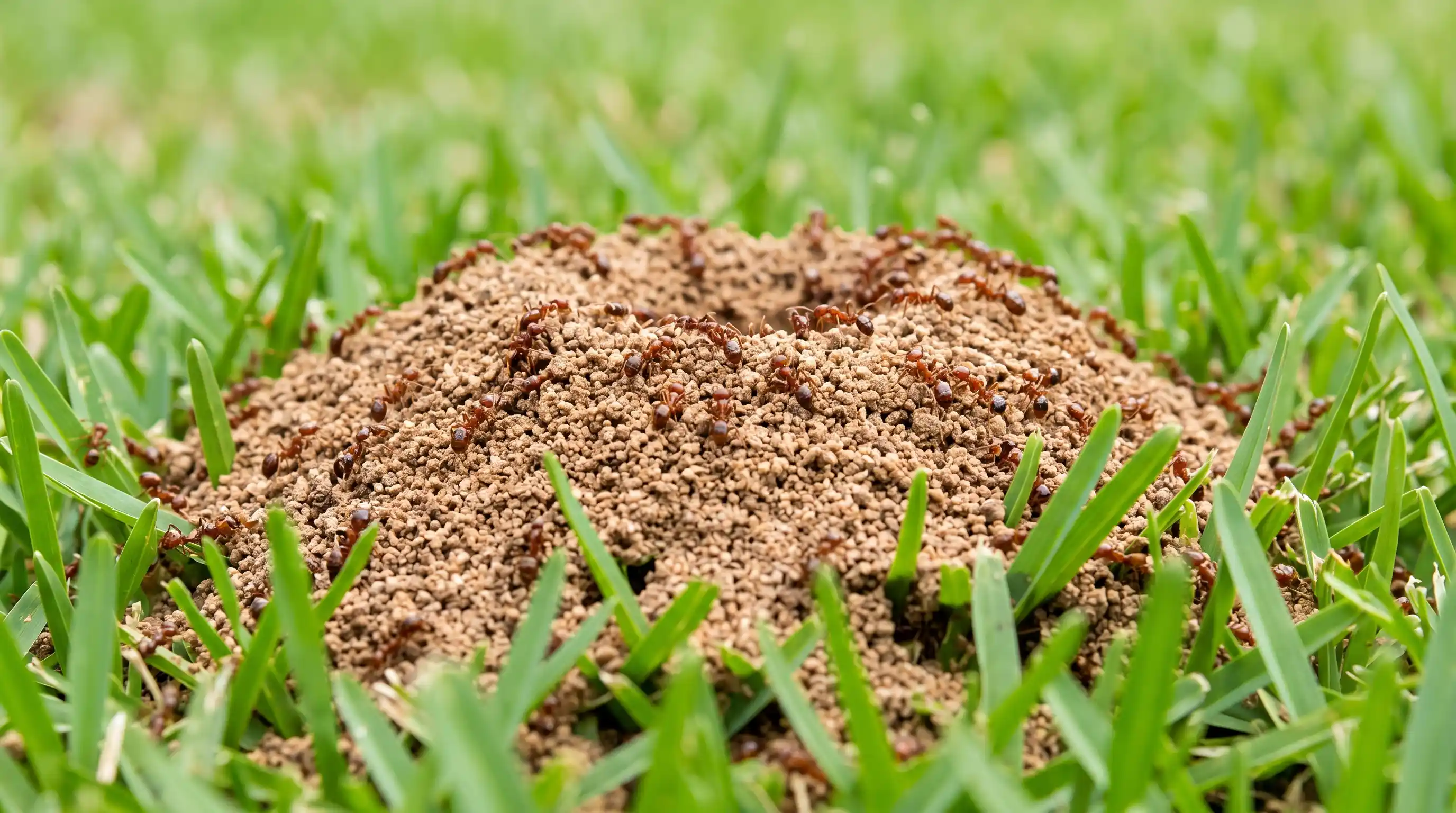
Fire ants and other lawn ants thrive in Citrus County's humid subtropical climate where hot summers and frequent moisture keep soil active. In areas with sandy soil like Citrus Hills and Inverness Highlands, colonies expand quickly because loose ground lets queens establish new mounds after rain or lawn disturbance. Homeowners often notice small dirt piles or trails along sidewalks and near the Citrus County Courthouse or Fort Cooper State Park edges.
Signs of activity include fresh mounds that appear overnight, ants foraging on pavement during mild winter days, and occasional stings when lawns are mowed. The combination of humidity and sandy conditions in Downtown Inverness allows colonies to persist longer than in drier regions. Prevention focuses on reducing moisture around foundations, clearing leaf litter, and maintaining consistent lawn borders so new queens have fewer places to settle.
Video Overview: Fire Ant & Ant Lawn Treatment in Inverness, FL
This one-minute video covers the signs of fire ants in the lawn, from new mounds after rain to stings while mowing, and why one yard can hold colonies with more than one queen. It also explains how mound treatments and baits that workers carry back to the colony bring activity under control.
[▶ Watch Video Overview: Fire Ant & Ant Lawn Treatment in Inverness, FL](https://www.youtube.com/watch?v=rYK9OEgKBGU)
Local providers typically combine mound drenches with broadcast baits that worker ants carry back to the colony. Treatments target both visible mounds and the surrounding foraging area because fire ants can have multiple queens spread across a single property. Follow-up visits address any new activity that surfaces after heavy rains common in the region.
Technician insight
In Inverness the thing that catches most people out with Ant & Fire Ant Lawn Treatment is how fast colonies reappear in the sandy soil after a single heavy rain. Homeowners in Citrus Hills often treat only the visible mounds and miss the fact that queens have already moved into the loose ground under the turf, so the problem restarts within weeks.
Recurring Mounds After Summer Rains
A homeowner in Inverness Highlands noticed fresh dirt piles appearing across the backyard following several storms. The provider identified multiple satellite colonies spreading through the sandy lawn. Targeted baits were placed along trails and around active mounds. Activity dropped noticeably once the material reached the queens.
Ant & Fire Ant Lawn Treatment Services We Offer
✓Fire Ant Mound Treatment
Targets individual mounds with liquid or granular applications that reach the queen and colony members below the surface.
✓Argentine Ant Perimeter Control
Focuses on trails and nesting sites along building edges and walkways where these smaller ants commonly travel.
✓Lawn Ant Baiting Program
Uses slow-acting baits placed in active foraging zones so workers transport material throughout the colony network.
✓Seasonal Ant Prevention
Addresses recurring pressure from humidity and soil conditions that allow new colonies to form after summer storms.
✓Yard Border Ant Treatment
Treats the outer edges of properties near neighboring lots or natural areas where ants move in from untreated ground.
How it works
- 1
Property Assessment
A local provider inspects the lawn for active mounds, trails, and conditions that support ant colonies in sandy soil.
- 2
Targeted Application
Baits and mound treatments are placed in foraging areas and around visible colonies to reach the queen.
- 3
Follow-Up Monitoring
The provider checks treated zones for new activity and adjusts the approach based on results after weather events.