
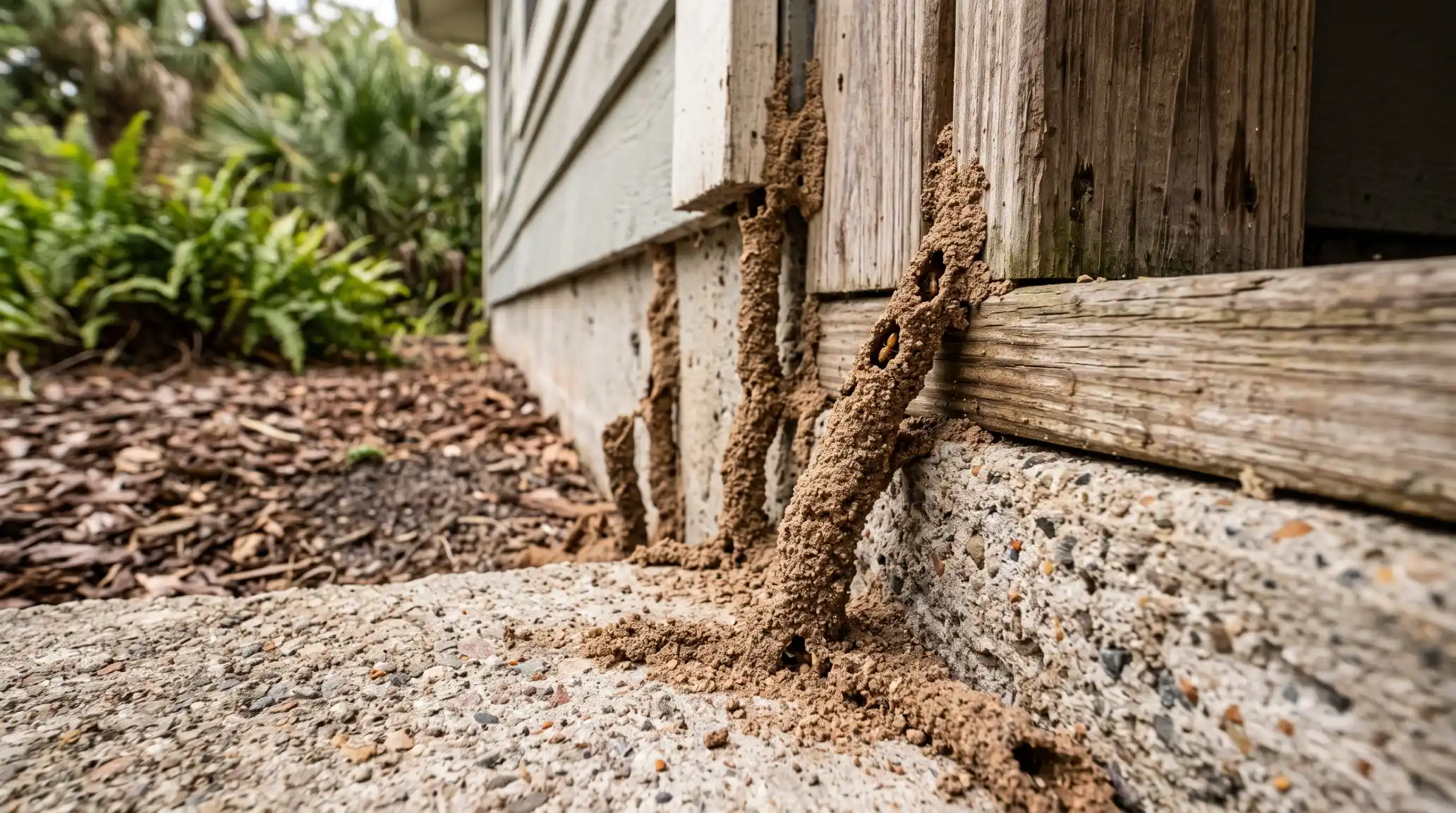
Subterranean termites thrive in the humid subtropical climate of Citrus County where hot summers and mild winters keep soil moisture high enough for colonies to remain active year-round. Sandy soils common around Inverness Highlands and Citrus Hills let foraging tubes extend easily from wooded edges near Fort Cooper State Park into residential foundations. Homeowners often notice mud tubes along slab edges or blistering paint on baseboards before visible damage appears in load-bearing timbers.
WDO inspections focus on both live activity and prior damage in structures near the Citrus County Courthouse and Downtown Inverness where many homes sit on older crawl spaces. Inspectors check for shelter tubes, discarded wings after swarms, and hollow-sounding wood in door frames and window sills. Local providers document findings for real-estate transactions and recommend targeted follow-up based on the specific construction details of each property.
Video Overview: Termite Control & WDO Inspections in Inverness, FL
This one-minute video covers the early signs of subterranean termites, from mud tubes on the foundation to discarded wings near windows, and why Florida's warm, humid climate keeps colonies active in Citrus County. It also walks through what a local provider checks and treats, from slab foundations to crawl spaces.
[▶ Watch Video Overview: Termite Control & WDO Inspections in Inverness, FL](https://www.youtube.com/watch?v=t1-VO_OCzvU)
Common Signs in Inverness Homes
Homeowners in neighborhoods like Citrus Hills frequently discover termite issues after noticing small piles of frass near baseboards or buckling floor tiles caused by hidden galleries in sandy subsoil. Routine checks around utility entry points and expansion joints help catch colonies before they reach interior framing.
Local Prevention Practices
Reducing soil-to-wood contact around homes near Inverness Airport and keeping gutters clear limits moisture that draws termites. Removing wood debris from crawl spaces and maintaining a gap between mulch beds and foundation walls are practical steps that local providers discuss during visits.
Technician insight
In Inverness the thing that catches most people out with Termite Control & WDO Inspections is how quickly subterranean colonies move through the sandy soil along the edges of Fort Cooper State Park into crawl spaces of homes built before modern moisture barriers became standard.
Citrus Hills Crawl Space Find
A homeowner noticed blistering baseboard paint after heavy summer rains. Local providers found active mud tubes running from the sandy perimeter soil into floor joists. Treatment focused on the foundation and stations were added along the property line bordering wooded areas. Follow-up checks showed no further activity.
Termite Control & WDO Inspections Services We Offer
✓Subterranean Termite Treatment
Targets colonies that tunnel through local sandy soils into foundations across Inverness Highlands and Citrus Hills.
✓Drywood Termite Inspection
Checks attics and interior wood for drywood activity common in older homes near Downtown Inverness.
✓WDO Inspection for Property Sales
Documents wood-destroying organism findings for transactions involving properties around the Citrus County Courthouse.
✓Termite Bait Station Installation
Places monitoring stations along perimeters in areas with high humidity such as those bordering Fort Cooper State Park.
✓Wood Treatment Application
Applies material to exposed timbers and framing in structures throughout Lecanto and nearby Inverness neighborhoods.
How it works
- 1
Property Assessment
Local providers examine the exterior and interior for signs of termite activity and note construction features typical of Inverness homes.
- 2
Soil and Foundation Review
Technicians evaluate soil contact points and moisture conditions around slabs and crawl spaces common in Citrus County sandy terrain.
- 3
Treatment Placement
Providers apply material or install stations according to findings from the assessment of each specific property.
- 4
Follow-Up Monitoring
Stations or treated areas are checked on subsequent visits to confirm activity levels have been addressed.