
2026-09-06 ·
Why DIY Sprays Make Florida Fire Ant Mounds Worse in Sandy Soil.
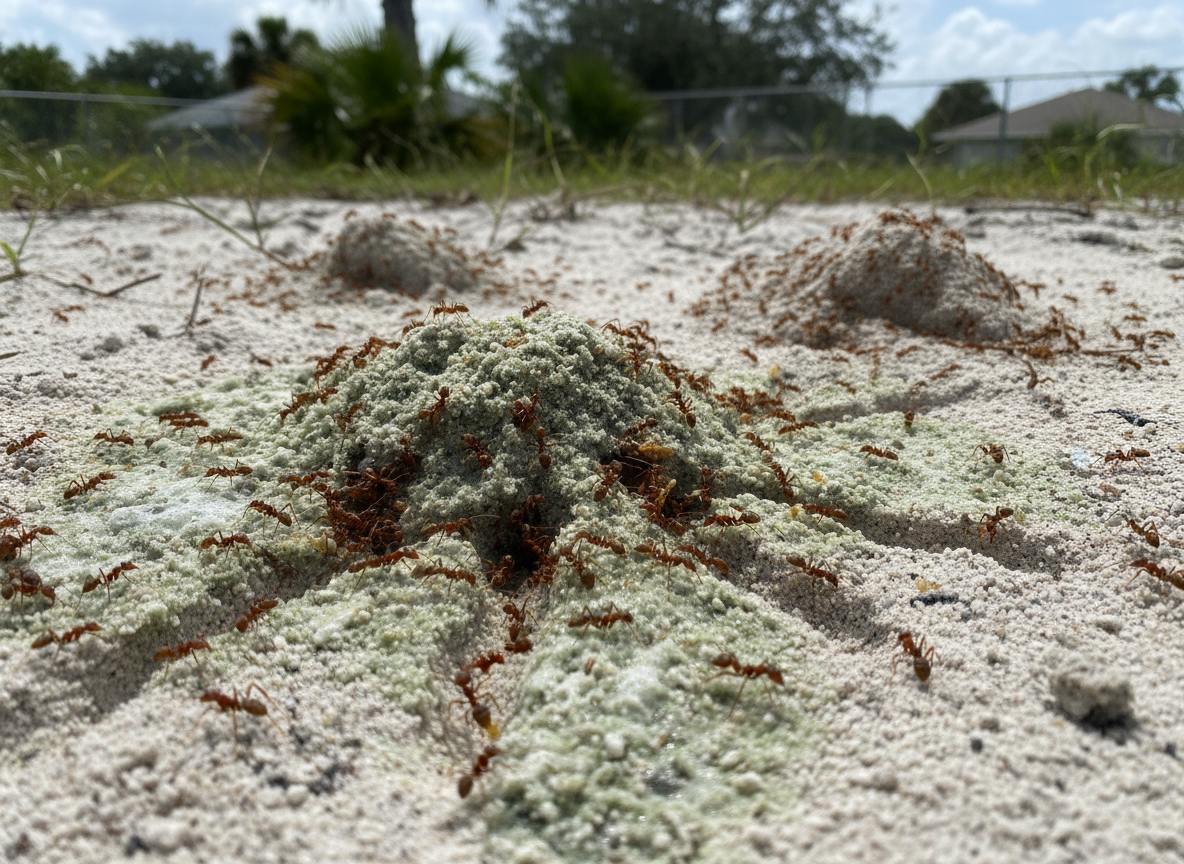
DIY sprays typically cause Florida fire ant colonies to split into multiple new mounds within days rather than eliminating the original one, especially when applied across the sandy soils common in Inverness Highlands and Citrus Hills.
Sandy Soil and Fire Ant Colony Dynamics in Citrus County
The sandy soils around Inverness, Crystal River, and Lecanto allow fire ants to tunnel quickly and deeply. When a DIY spray contacts the mound, surviving ants interpret the disturbance as a threat and split the colony. A single queen or several workers carry brood to new sites, often producing 2–5 satellite mounds within a week. This budding happens faster here than in clay-heavy regions because the loose particles offer little resistance to relocation. Homeowners in Inverness Highlands North notice the increase most after summer rains loosen the topsoil further. The humid subtropical climate keeps colonies active from early spring through mild winters, giving split groups time to establish before the next treatment attempt.
How Broadcast Sprays Trigger Budding Instead of Control
Broadcast application of over-the-counter products hits foraging workers but rarely reaches the queen 12–18 inches below the surface in sandy ground. The colony responds by abandoning the treated mound and relocating. In neighborhoods like Downtown Inverness and near Fort Cooper State Park, where lots sit on well-drained sand, this relocation often lands ants under driveways, patios, or irrigation lines. Each new mound then requires its own treatment, increasing the total number of active sites. Concrete numbers matter: one original mound can become four or five within 10–14 days when only surface spray is used. The pattern repeats because the sandy profile drains moisture and product away from the queen chamber before lethal contact occurs.
Local Terrain and Weather Factors That Amplify the Issue
Inverness sits in a region of rolling sandy ridges and seasonal high water tables. Hot summers push ants deeper for moisture, while hurricane-driven rains periodically saturate the soil and force colonies to move anyway. After storms, DIY users often see fresh mounds appear along property edges in Point O' Woods and Gospel Island. The combination of loose sand and frequent moisture changes makes surface sprays even less effective because the active ingredient leaches downward before it can persist. Mild winters allow year-round foraging, so any surviving split colonies continue expanding instead of pausing. These conditions explain why the same product that works on heavier soils fails to reduce mound counts here.
Practical Steps That Avoid Colony Splitting
Target individual mounds with a labeled bait that workers carry back to the queen rather than spraying the surface. Apply baits when foraging is active, usually early morning or late afternoon outside peak summer heat. Space treatments 10–14 days apart to catch any budding that began before the first round. In Citrus Hills and Inverness Highlands South, where properties back up to natural areas, consistent baiting along perimeters prevents new colonies from drifting in from untreated land. Ant & Fire Ant Lawn Treatment follows this mound-specific approach using products formulated for sandy profiles. Homeowners who switch from sprays to baits typically see mound counts drop steadily instead of multiply.
When to Call for Targeted Help in Inverness
Persistent mounds after two bait cycles usually indicate multiple queens or satellite sites already established underground. A technician can locate active tunnels with a probe and deliver material directly to the queen chambers. Properties near Inverness Airport or the Citrus County Courthouse often need this precision because sandy fill around foundations creates extra tunneling routes. What to Expect During a Florida WDO Inspection in Citrus County explains how inspectors map soil conditions that also affect ant movement. Inverness Pest Solutions operates from Main St, Inverness, FL 34450 and is available Mon–Sun 7am–8pm for assessments that focus on the specific soil and weather realities of each yard.